Encryption Standards in Swiss Casino Apps: Driven by Regulatory Demands
Geschrieben von Elena Wagner · 20.8.2026
Encryption Standards in Swiss Casino Apps: Driven by Regulatory Demands
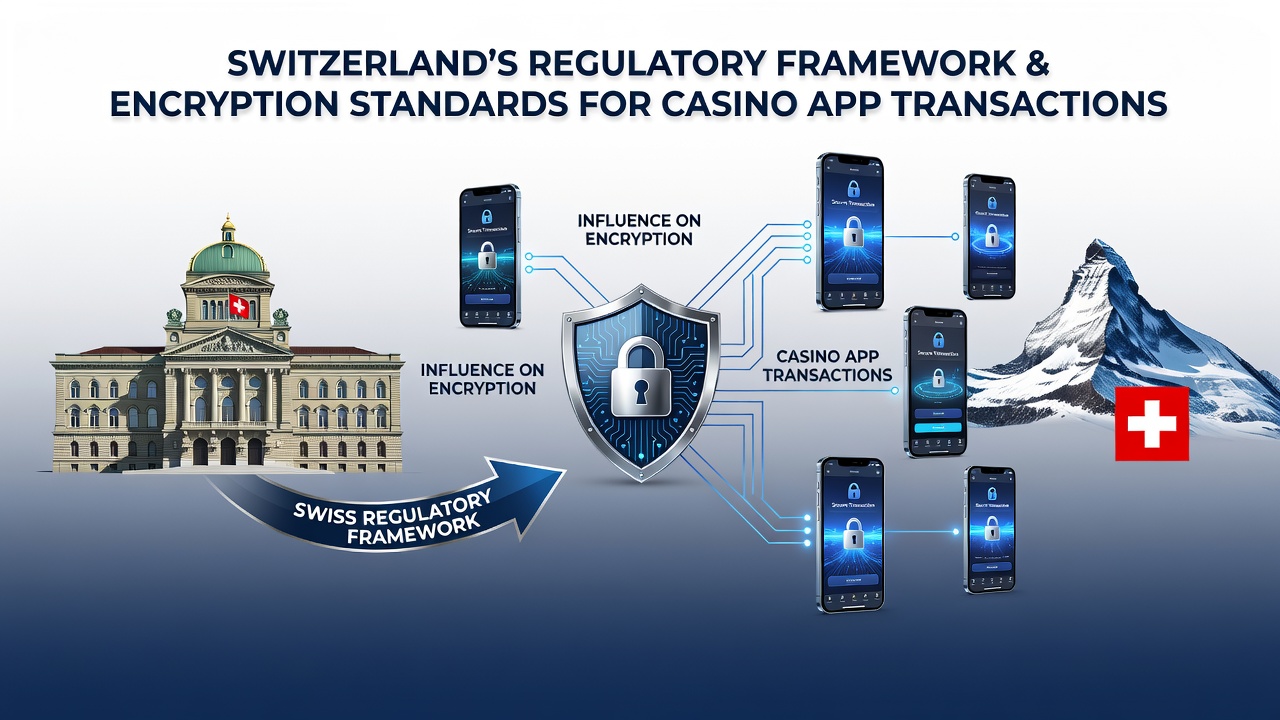
Switzerland maintains a structured approach to gambling oversight through the Federal Act on Gambling that took effect in 2019, and this legislation extends its reach into the technical specifications required for secure mobile transactions in licensed casino applications, while data protection rules under the revised Federal Act on Data Protection add layers of mandatory safeguards that operators must implement for user information during app-based payments and account management.
Core Elements of Swiss Gambling Regulation
Authorities enforce licensing conditions that require operators to demonstrate compliance with encryption protocols capable of protecting financial data exchanges, and these conditions stem from coordination between the Federal Office of Justice and the Swiss Federal Gaming Board, which review technical submissions before granting or renewing permits for online platforms targeting Swiss residents.
Operators submit detailed documentation on their security architecture during the approval process, and regulators examine how encryption handles sensitive details such as payment card numbers, withdrawal requests, and session tokens that move between casino apps and backend servers.
Data Protection Integration With Transaction Security
The Federal Act on Data Protection, updated in recent years to align with evolving international norms, imposes obligations on data controllers to apply appropriate technical measures, which in practice means that casino apps processing Swiss user data often adopt TLS 1.3 for transit encryption alongside AES-256 for stored records, and these choices reflect requirements to prevent unauthorized access during routine operations.
Regulators conduct periodic audits that verify whether encryption key management follows documented procedures, and failure to meet these benchmarks can result in restrictions on app functionality until corrections occur.
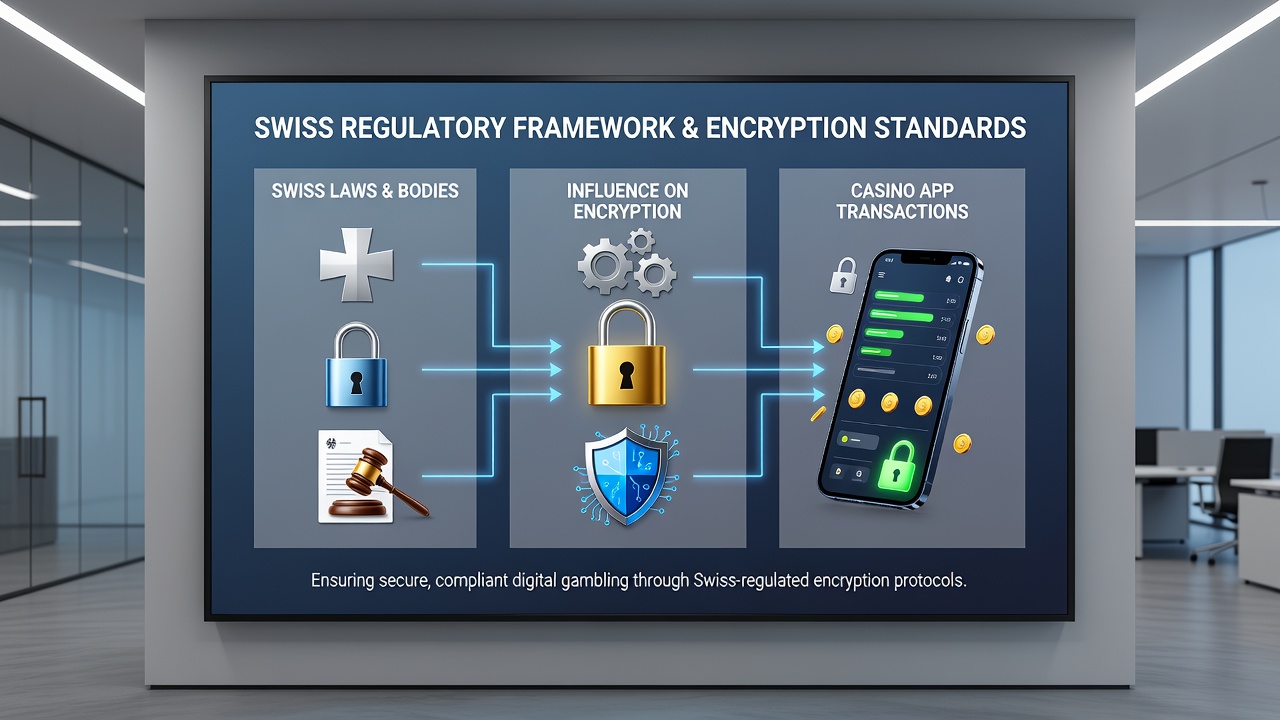
Observers note that Swiss rules emphasize end-to-end protection for financial flows, and this emphasis influences how developers structure in-app purchase flows and real-money transfer modules to ensure continuous compliance across device types and operating systems.
Technical Standards Applied to Casino Applications
Licensed platforms must incorporate certificate pinning and secure random number generation within their mobile codebases, measures that reduce risks associated with man-in-the-middle attacks during live betting sessions or jackpot claims, while independent testing laboratories evaluate these implementations against criteria set by Swiss authorities before apps receive distribution approval through official channels.
Payment service providers integrated into casino ecosystems also fall under scrutiny, because transaction data passes through multiple parties, and Swiss regulations require each participant to maintain equivalent encryption strength to avoid weak links in the overall chain.
Developments Expected by August 2026
Updates scheduled for August 2026 introduce enhanced reporting on cryptographic algorithms, requiring operators to disclose any planned transitions away from legacy protocols such as older TLS versions, and these changes aim to keep pace with advances in computational power that could affect long-term data confidentiality for stored transaction histories.
Industry participants prepare by mapping current encryption deployments against forthcoming benchmarks, and regulators provide guidance documents that clarify acceptable migration paths without disrupting ongoing service availability for users.
International Comparisons and Influence
Standards bodies in other jurisdictions, including guidance from the National Institute of Standards and Technology in the United States, inform Swiss technical reviews, while the Australian Office of the Australian Information Commissioner offers parallel perspectives on cross-border data flows that Swiss operators sometimes reference when handling international user bases alongside domestic requirements.
These external references help Swiss authorities maintain alignment with global best practices, yet local implementation remains distinct because of the specific licensing conditions tied to the 2019 gambling legislation.
Conclusion
Switzerland's regulatory structure shapes encryption practices in casino applications through a combination of licensing mandates, data protection statutes, and scheduled technical updates, and operators respond by embedding robust cryptographic controls that satisfy both current expectations and forthcoming obligations scheduled for 2026. This framework continues to evolve as new threats emerge and as regulatory bodies refine their evaluation criteria based on audit findings from licensed entities.